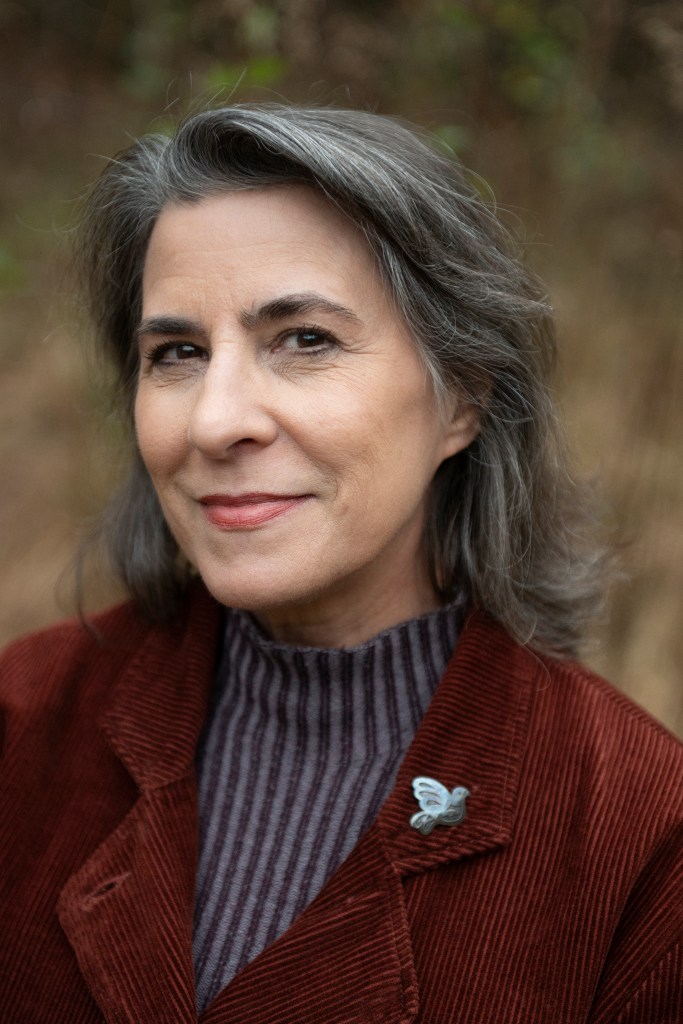
April features a wonderful interview with Author/Illustrator Cynthia Cliff. As a member of the SCBWI Mid-Atlantic region, I’ve had the pleasure of meeting her at several events.
Welcome, Cynthia. Thanks for stopping by.
Thank you, Leslie, for spending some time with me. I really appreciate the interest in my work and being included in your blog.
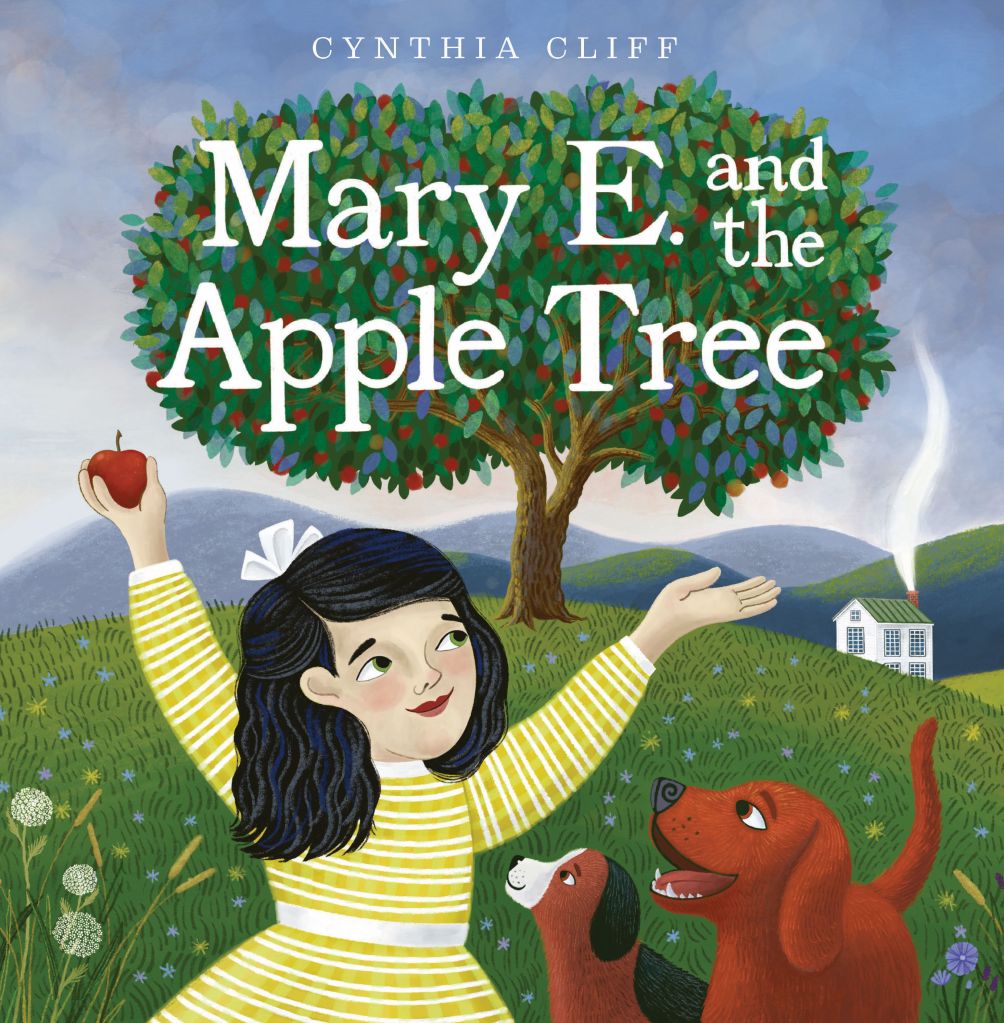
Bio: Cynthia Cliff is an author and self-taught artist who grew up in a tiny, historic village in rural Virginia surrounded by farms and woodlands. This upbringing provided her with a love of history, nature, and folklore—themes that find their way into her whimsical, folk-art inspired storytelling. She has several published children’s books including A Day at the Museum, A Weekend Trip, The Wild Garden, and Pie for Breakfast. Her upcoming book Mary E. and the Apple Tree, published by Greenwillow Books/Harper Collins, out September 2026, is about one girl’s experiences growing up on her family’s orchards and is inspired by her own Shenandoah Valley heritage.
You are an illustrator and a writer. What came first in your career? Both. I got my first book offer in 2020 when an editor with Prestel/Penguin Random House saw a baking blog I had called “Pie for Breakfast” that included recipes and artwork. The publisher asked me to write a baking book for children. In the book I included a story to hold all the recipes and characters together. The same publisher asked me to write and illustrate additional books. In the beginning I didn’t plan on being an author—I was still developing my illustration skills, but because of the publisher’s belief in me as an author, I decided to focus on writing as well. Since that first book, I have been learning and developing my writing skills—taking classes and workshops and I joined a writing critique group.
How long have you been writing and illustrating? I began artmaking in 2016 when my children were both in college—the nest was empty, and I felt empty too. I still owned a business and worked full time but felt something was missing. I tried filling my evenings with a few different things and nothing felt right. I had loved drawing as a child, but as an adult I always felt that art making was a luxury I could never afford timewise. I decided to give drawing a try and told myself I’d stop if I wasn’t enjoying it. But that’s not what happened. At first, I wasn’t very good, but I was enjoying it more than I could ever have imagined, and I became kind of obsessed. The creative process was thrilling. I wanted to get better and was driven to do so. After about a year of art making, I saw that my art was about storytelling. I’d always been in awe of picture book art and had been collecting children’s books, so I felt that illustrating for children would be a perfect fit. I really didn’t began writing in a serious way until 2020 when I got that first book offer.
Where did you learn to draw? I essentially taught myself. As a child and teen, I was hyper-focused on making things—anything, in all kinds of mediums. I’d try any kind of craft or art project a try—drawing, paint-by-numbers, needlework, woodworking, pottery, candle making, baking—really anything creative. I was the kid always making stuff. But I was from a small town and art and crafting were not considered viable career choices, so when it was time for college, I didn’t know what to do. After two years of general studies, I found graphic design and figured I could be creative and make a living as a designer. I spent the last two years of college focused on that. In my design classes I learned about composition, color theory, creative thinking, problem solving, and how to interact with clients—attributes that are all useful in illustration. But I didn’t learn much about artmaking.
When I started to make art as a hobby in 2016, I wasn’t sure where to start, so I just began experimenting and trying different materials and mediums. After some time, I saw an inclination toward illustration, so I homed in on that. I decided if I wanted to get good at it, I needed to be serious about it and would need some training. I really wished I could go to art school, but with two children in college and as a business owner, that just wasn’t an option for me money-wise or timewise. Instead, I developed a learning plan for myself. It included targeted and thoughtful practice, self-assignments, and study of the genre. I joined SCBWI in 2017 which was a wealth of information and support. I started taking some on-line illustration courses and workshops and made lots and lots of art. And I’m still learning!
Which is your favorite—illustrate or write? Don’t make me choose! Right now, I really love them both and how they work together. They use both sides of my brain. Writing is such a challenge—it’s like solving a big puzzle and putting all the pieces together to make something new, unique, and seamless. Illustration is so fluid—it’s emotional and comes from deep inside me. It is thrilling to watch something appear on the page, never knowing exactly what will happen. Putting the two together to tell a story, where they are parallel and support each other, is especially satisfying.
Where do you get your inspiration? Everywhere! Sometimes I find inspiration and ideas on my daily walks, when out in nature, and from travel. Other times ideas are sparked when looking at other people’s work, old photographs, or when visiting museums. Often dreams, snatches of a conversation, poetry and memories can conjure up ideas for stories and artwork. Ideas come to me from all directions. My problem is that I have too many ideas and it’s hard to choose which ones to pursue.
How long does it take for you to illustrate and write a story? That varies a great deal. An illustration for a book can take anywhere from two weeks to a month depending on the complexity and how much research is required. Sometimes a personal art piece will only take only one day. For writing, that also depends. A picture book can be written quickly, then takes months of on and off tweaking to fine tune and polish the story. I’m working on a middle grade novel now and I imagine that it’ll take months and months to complete.
What has been the most challenging for you as a writer and/or illustrator? I didn’t start making art or writing until late in life, so for me the challenge has been having to hone my craft rather quickly to become a professional. Also, time. There is never enough of that.
How has your style evolved over time? Speaking about illustration—when I first started drawing about 10 years ago now, it was in a more representational way, often drawing from life or from photographs. At the time I was just learning how to draw, and I think that was a good way to start. Then I began creating my own compositions and stories in a more emotional way. I made choices about materials and subject matter and let my art influences find their way into my work. When creating I embraced my life experiences and memories from childhood and combined those with my point of view. Overtime, all these things coalesced into my own unique style. As for writing—I think I’m finally starting to see my style come through after lots and lots of practice. It is again about the choices that I make based on my own experience, knowledge, and influences. Letting all those things shine in my writing makes it uniquely my work.
What advice would you give aspiring writers or illustrators? Here are a few key things that really helped me. Create as much as you can—fit creative time into your life and make it a priority. Practice with purpose and with goals in mind. Join a critique group and get feedback. Take advantage of portfolio reviews or writing critiques by industry pros whenever you can. Attend SCBWI events, workshops and classes. Study your area of interest. And read and look at lots of children’s literature, both old and new. Lastly, have fun! Your joy should show in your work.
What’s your favorite part of the writing process? That’s easy, the beginning, when the idea first comes. Then it just flows. I love that feeling.
What’s the best career advice you’ve ever received? This is more craft advise, but it’s something that stuck with me. After I’d been drawing for only a couple of years I had my second ever portfolio critique by Pat Cummings, an award-winning, picture book author/illustrator giant. She questioned why many of my characters were facing to the left and not to the right with the page turns. It was a simple comment but made me more aware of the reader when making art for picture books. I started thinking more deeply about how the position of the character matters in the telling of the story—the character’s body language and placement can help keep the reader engaged and moving forward with the story.
What is next for you? I have a new book coming out in the fall from HarperCollins, Mary E. and the Apple Tree—I am the author/illustrator and it’s a story from the heart that took me years to figure out. I am currently putting together launch materials and school programs for this book. I am also working on illustrations for a picture book for Nancy Paulson Books/Penguin Random House. I’m not the author but am really excited about how the work is going. I am also in meetings with a publisher about a new manuscript, and I’m working on a middle grade novel that my agent is excited about.
What else do you want your readers to know? I want them to know, that no matter how old you are, or where you are on your life’s journey—it is still possible to pursue a new course for your life, a new career, or a new passion. Maybe that is illustration or artmaking, or perhaps that is writing. Whatever it may be, it’s never too late to live a creative life or to learn something new.
Thanks, Cynthia for stopping by! If you wish to follow Cynthia, you can find her on Instagram at https://instagram.com/ceecliff_art/. Her website is www.cynthiacliff.com.
My April picture book giveaway winner is: Gloria Goldfaden from Virgina.
Until next month. . .
 Leslie Eva Tayloe